
Kinnect: Conversation Hand-off Feature
OVERVIEW
TYPE
TOOLS
Figma
TIMELINE
2 months

TL;DR (TOO LONG; DIDN’T READ)
The Friction
Kinsta's support team relied on Intercom to manage live chat conversations, but persistent performance issues and a clunky UI were slowing agents down and frustrating the team. They needed something better, built for them and their specific needs.
The Fix
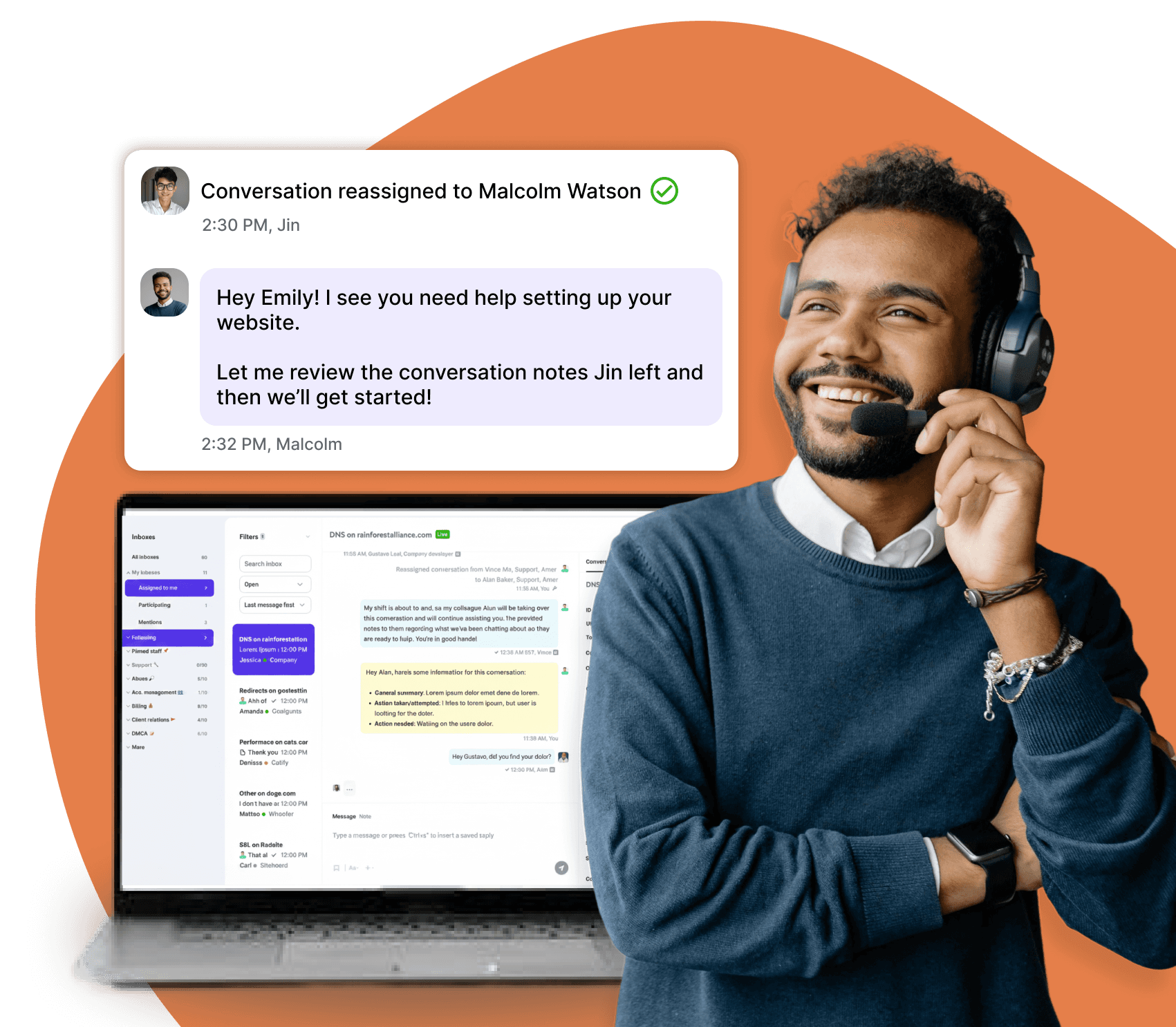
I designed an automated handoff feature inside Kinnect, Kinsta's internal customer support platform, automating agent reassignments so no conversation gets dropped when a staff member steps away, ends their shift, or need to route to a multilingual agent.
The Result
A reduction in manual handoff steps, maintained conversation continuity for customers, and learning curve reduction for agents transitioning from Intercom.
Define
WHAT IS 'KINNECT'?
Kinnect is Kinsta's internal customer support platform, built to replace the third-party tool Intercom for managing live and asynchronous communication between support staff and customers. Support members and management had reported persistent performance and UI issues with Intercom that were hurting the team's efficiency.
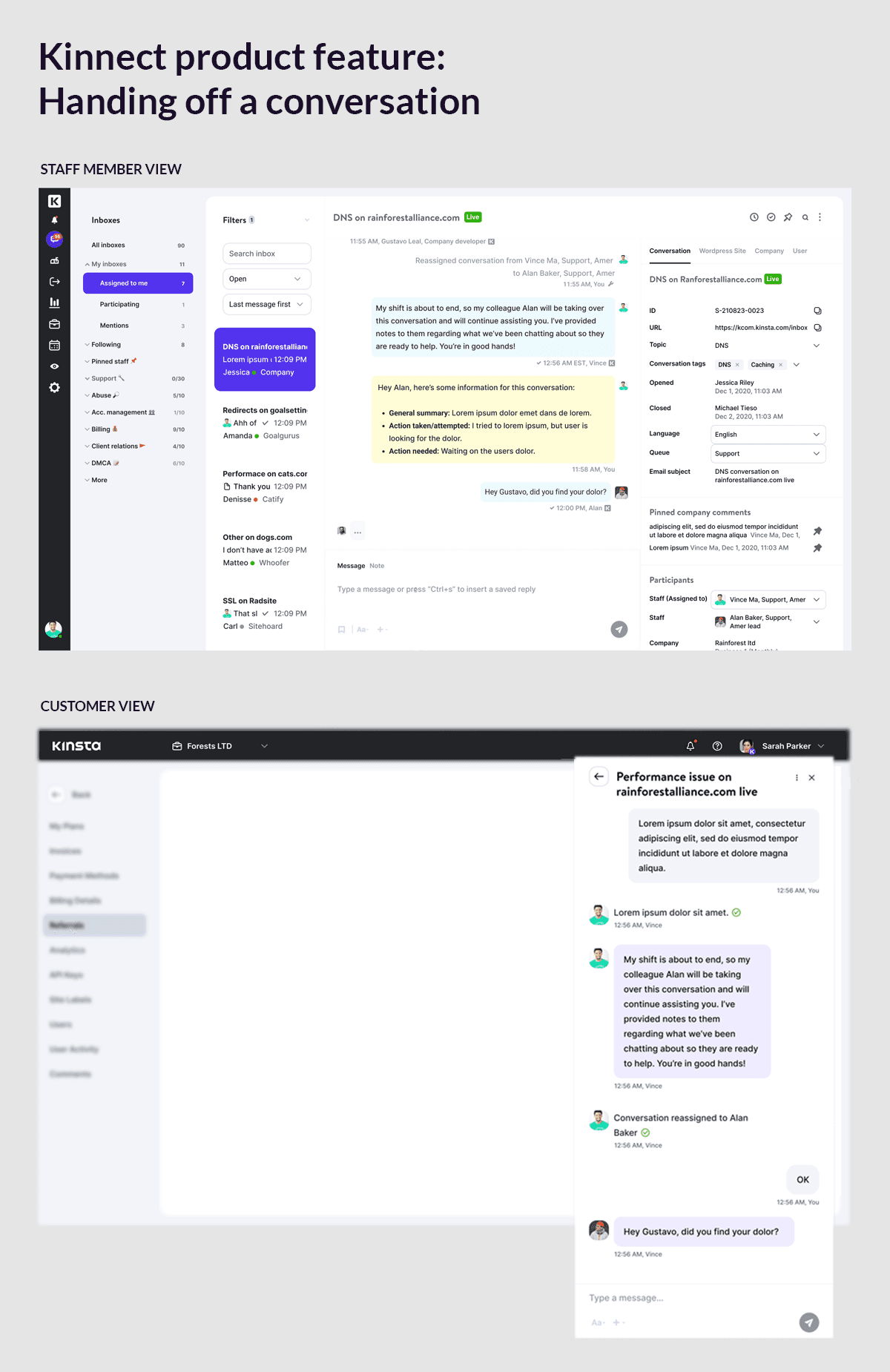
This case study focuses on one of Kinnect's core features: conversation handoffs — a templated, automated system that reassigns live chat conversations to available agents when a staff member needs to step away, end their shift, or route to a multilingual agent.
Discovery
THE PROBLEM: NO AUTOMATION MEANT NO BACKUP FOR AGENTS
Staff members need to be able to reassign live chat conversations to other team members when…
A shift ends
Taking lunch and personal breaks
Unexpected step-aways occur
Multilingual routing occurs — this is when a customer needs an agent who speaks their language
HOW SHOULD HAND-OFF'S ACTUALLY WORK?
First, I needed to understand how staff members would initiate handoffs within Kinnect.
Initial Direction
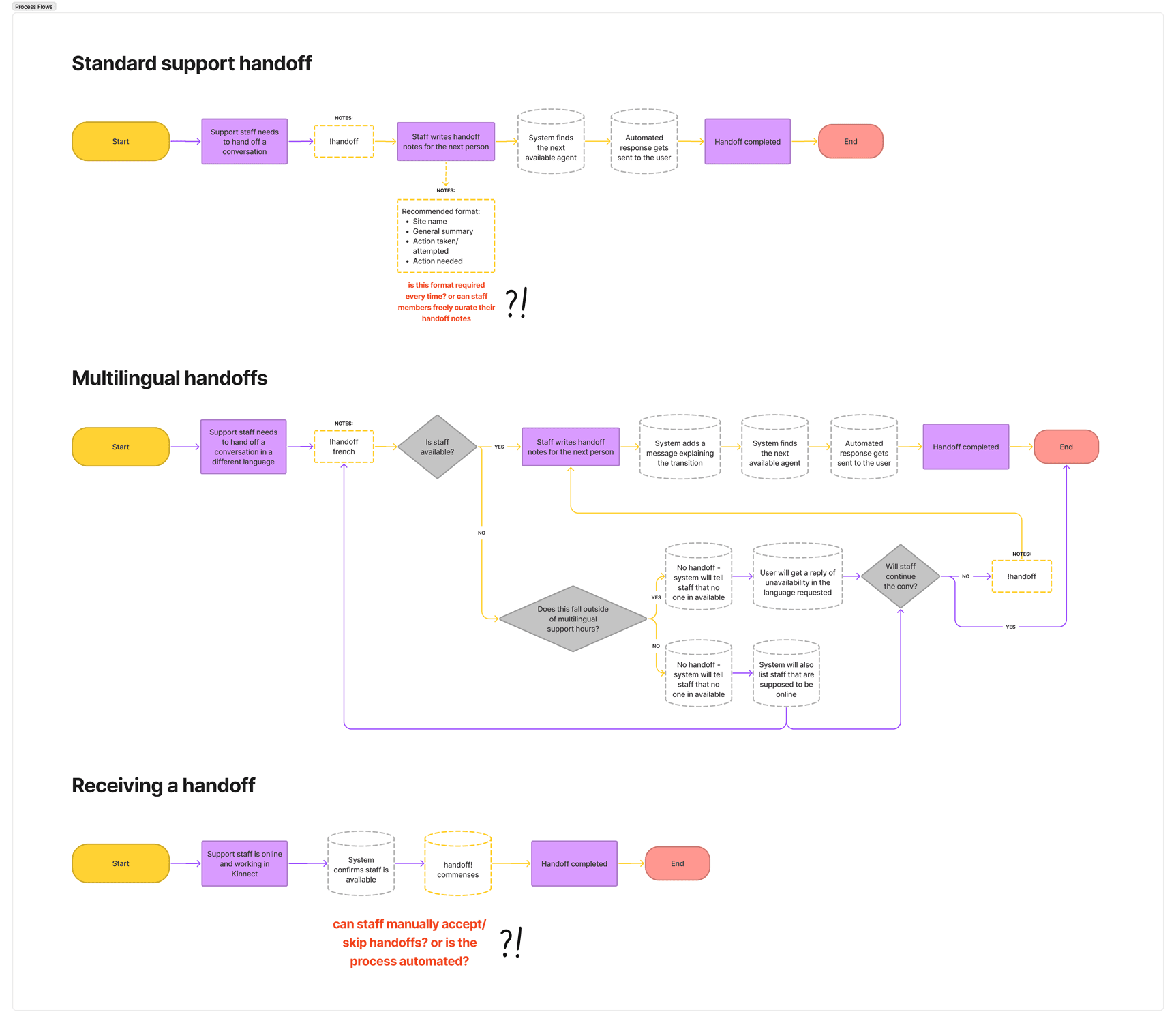
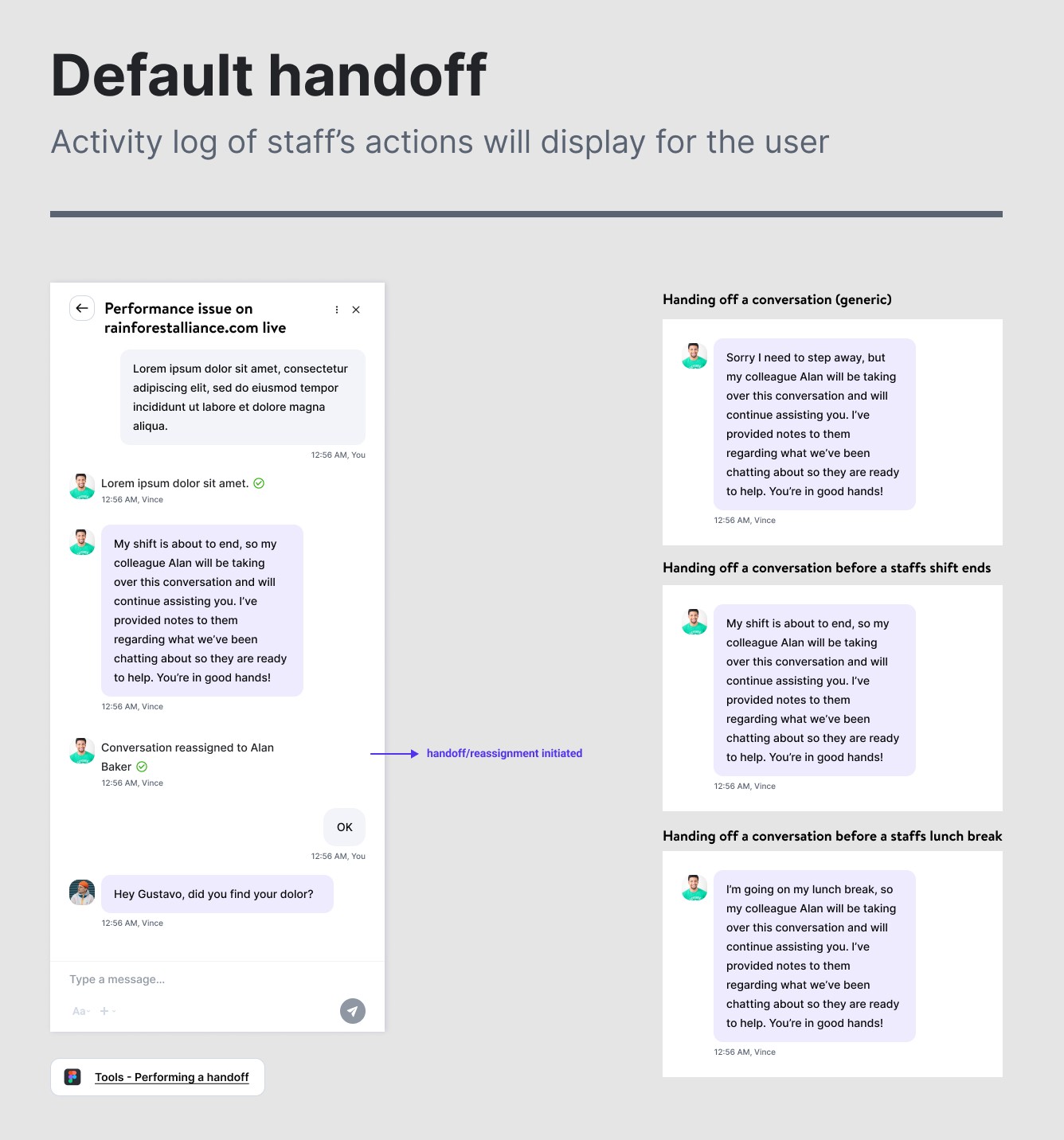
At first, staff members would type in a hot key. Once they hit “enter” the system will find the next available agent to hand over the conversation and send an automated message to the customer informing them that a new support member will continue to assist them.
During this process, the project manager and stakeholders were on board with the solution. However, during additional meetings we streamlined the process to automate messages 5 minutes before a shift ends or when a staff member unassigns themselves to a conversation, thus triggering the automated logic for the handoff.
CHALLENGES & OBSTACLES
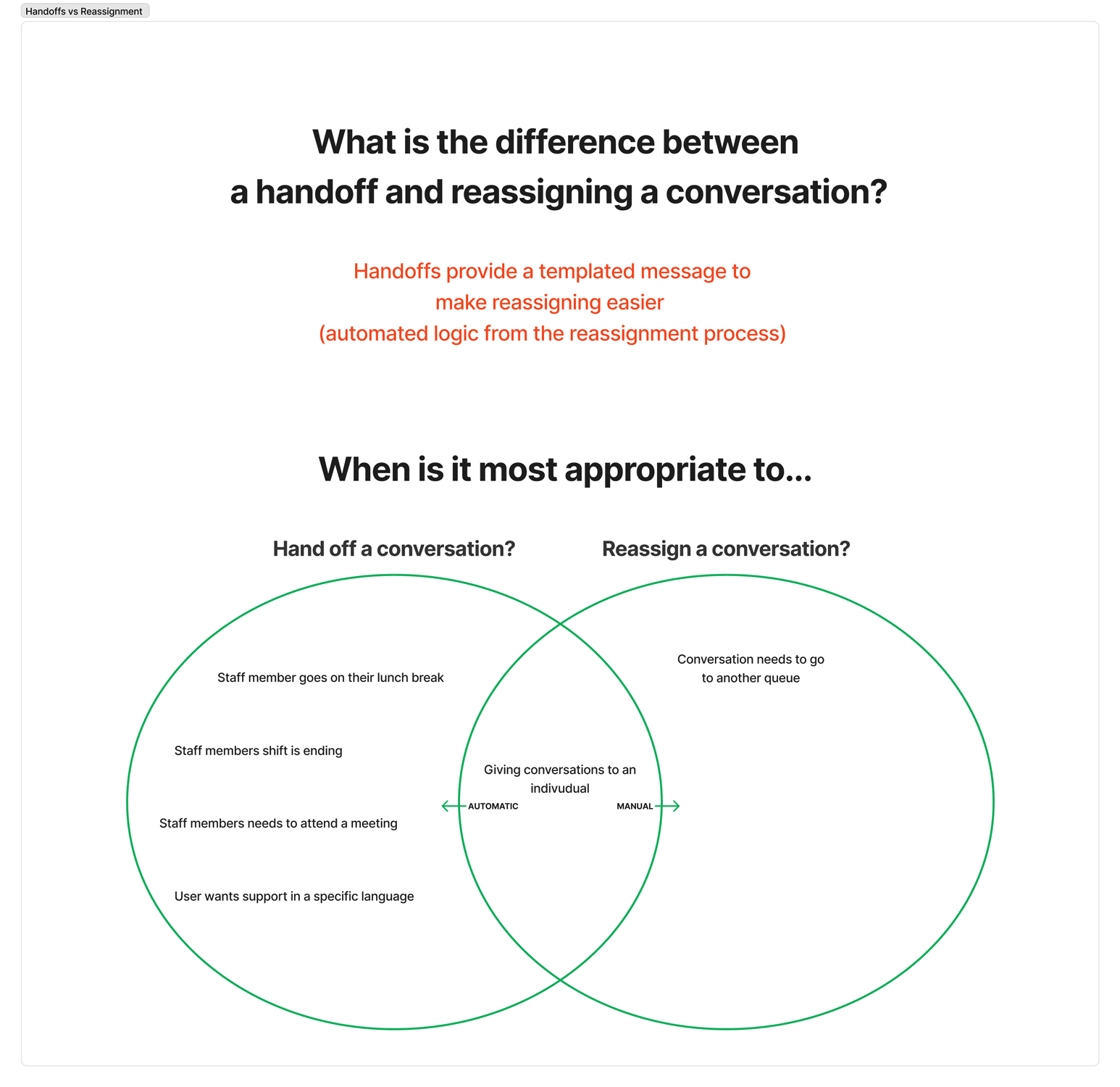
During a design review, a teammate flagged a potential conflict. She had been working on a reassignment feature and was concerned that support staff might confuse the two.
I was the sole designer on the handoff feature, but Kinnect itself was a larger effort with a team of four designers, myself included, working across the broader chat operating system. That context made this collaboration especially important to get right.
To solve this, we collaborated and discussed each features key goal and functionality.
Within this process we discovered that…
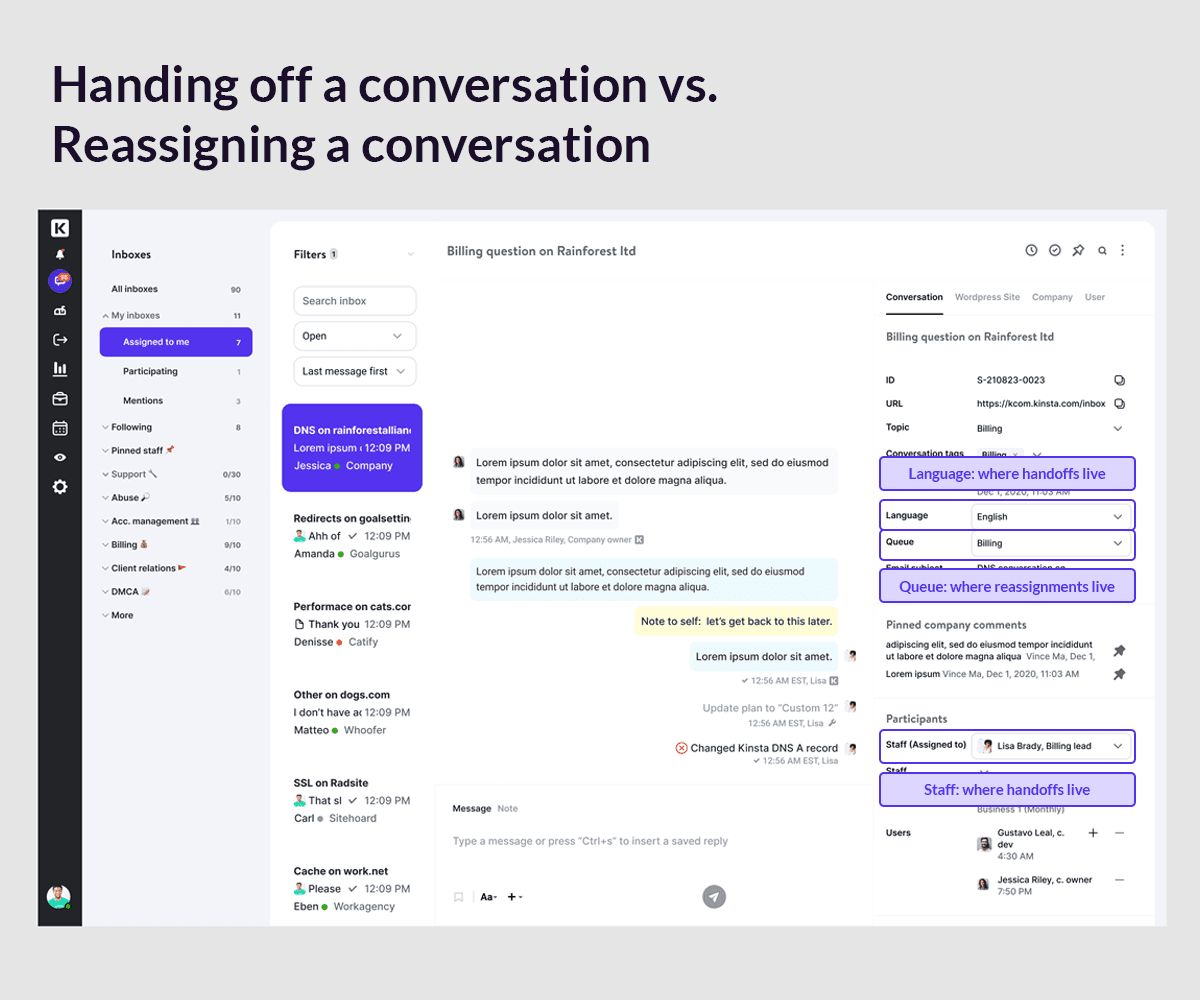
Handing off a conversation pertains to a staff member
The feature automates live conversations sent to customers. Additionally, certain actions, like lunch breaks and shifts ending, reassigns a conversation automatically in case a staff member forgets to do it manually.Reassigning a conversation only pertains to a queue—except for asynchronous conversations such as emails
It happens when a staff members needs to move a live chat conversation from one team to another (for example from a Support queue to a Billing queue). This action is always manually done by the support member. There is never any automation involved.

The Solution & Key Design Decisions
LET AUTOMATION DO THE HEAVY LIFTING
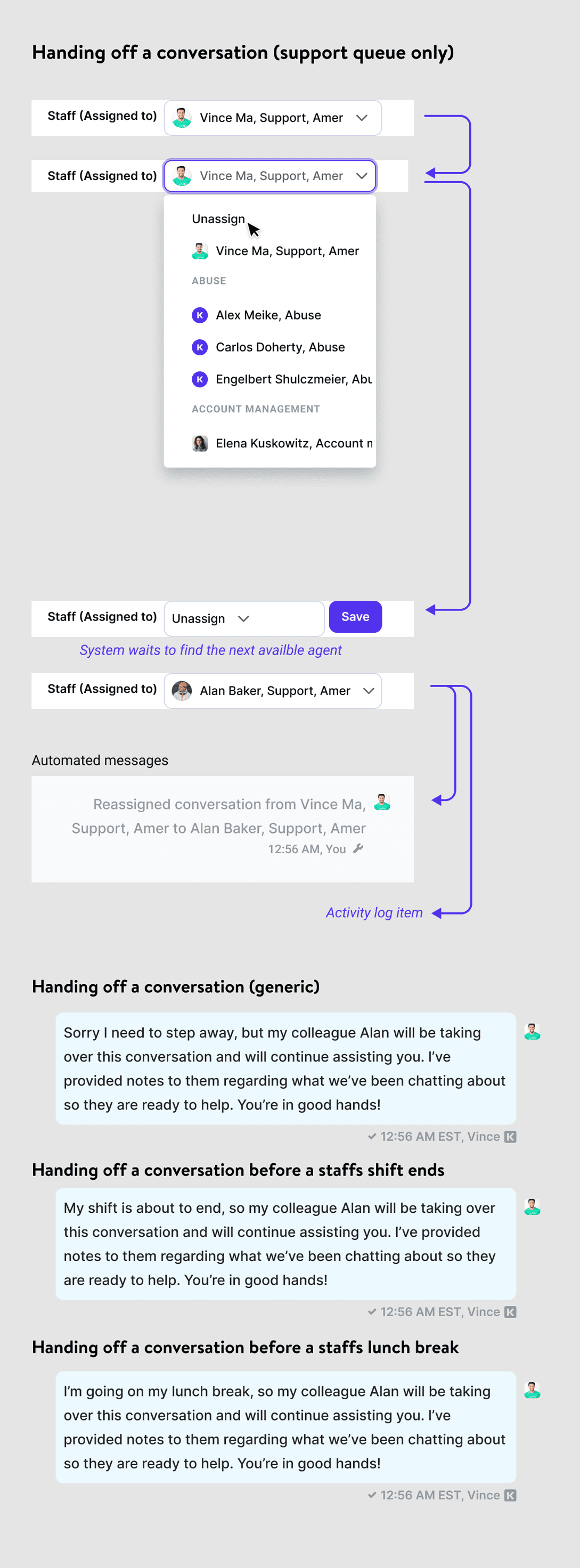
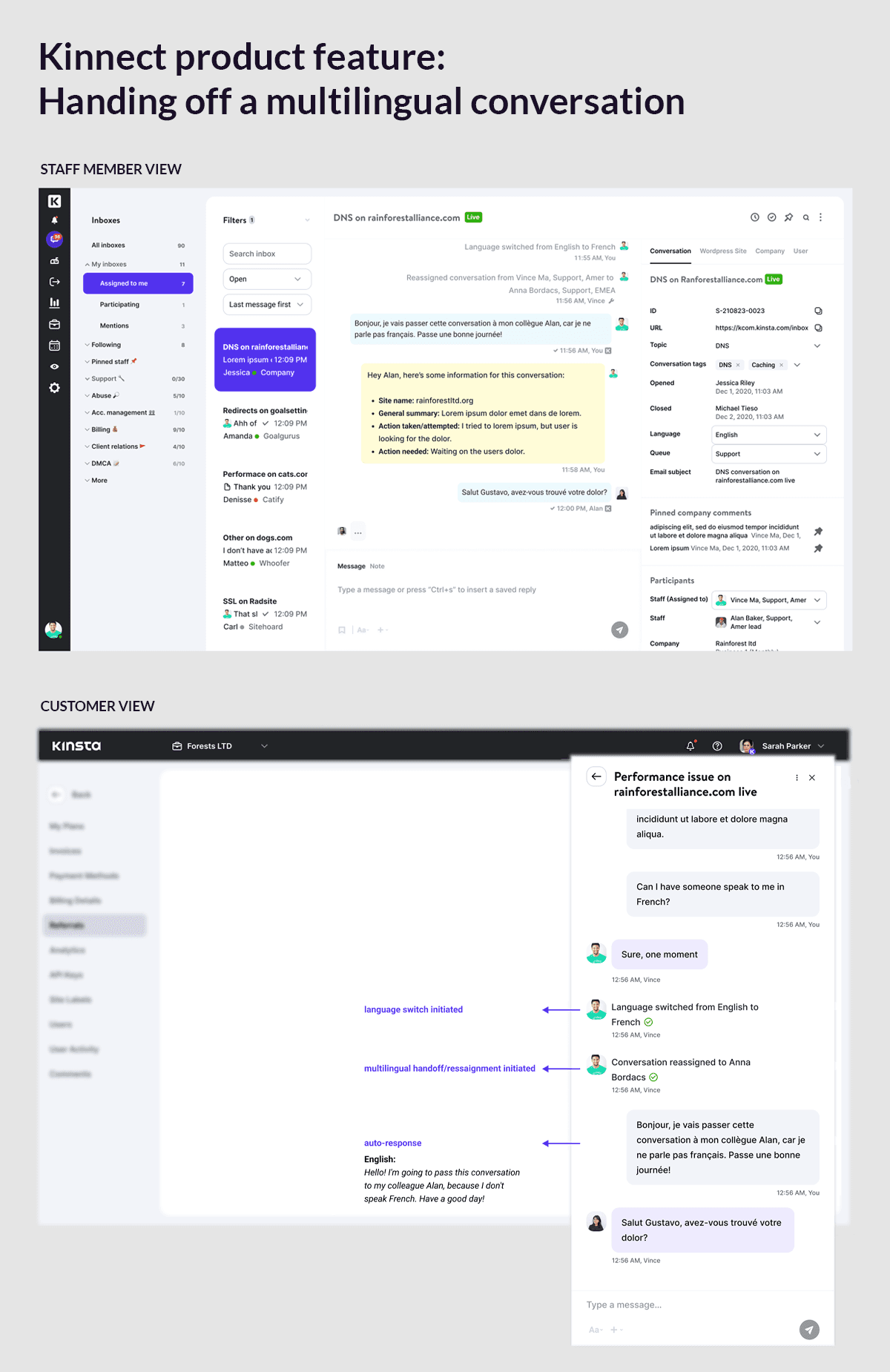
Staff members could initiate handoffs in one of two ways:
Basic handoff
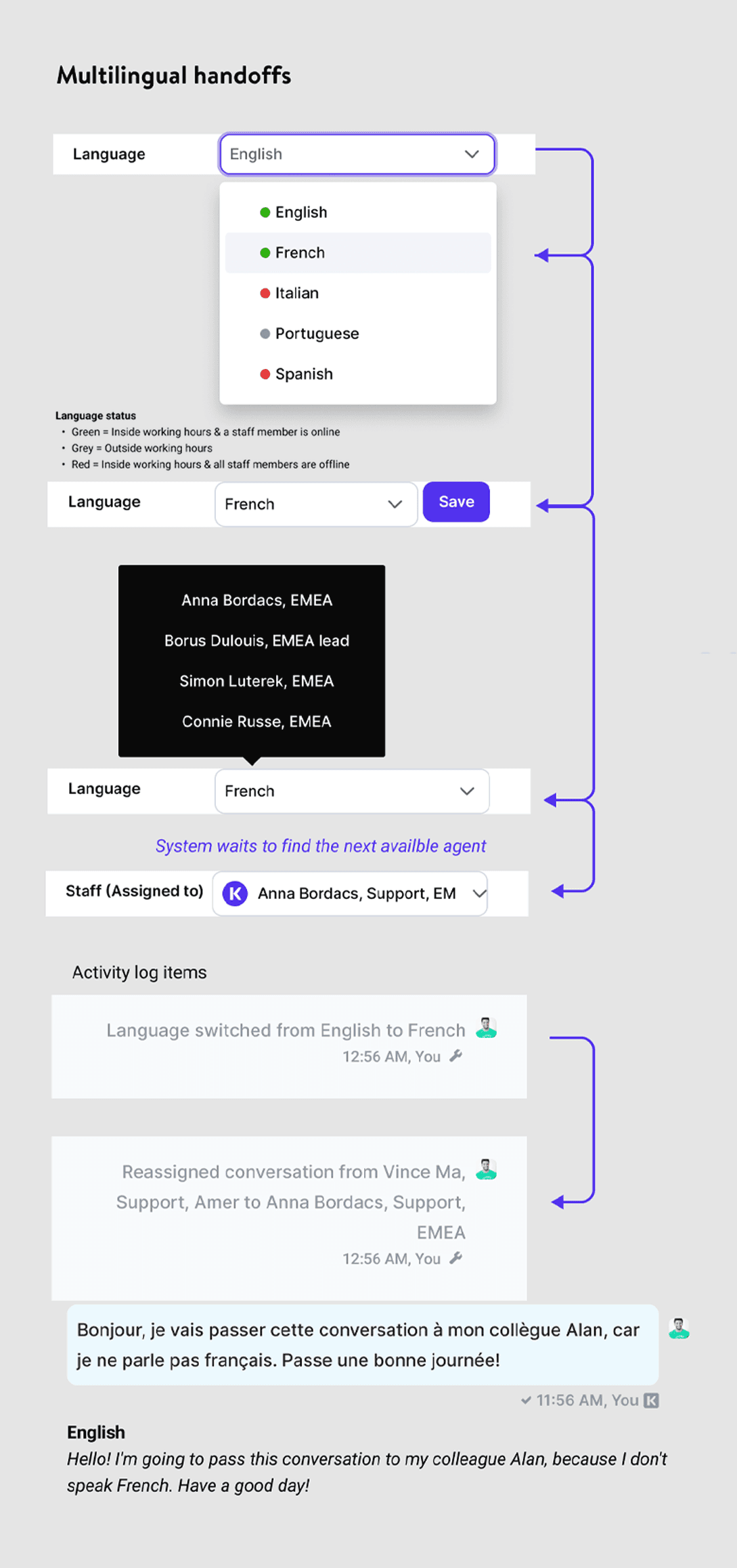
Select "Unassign" from the Staff dropdown. Automation handles the rest.Multilingual handoff
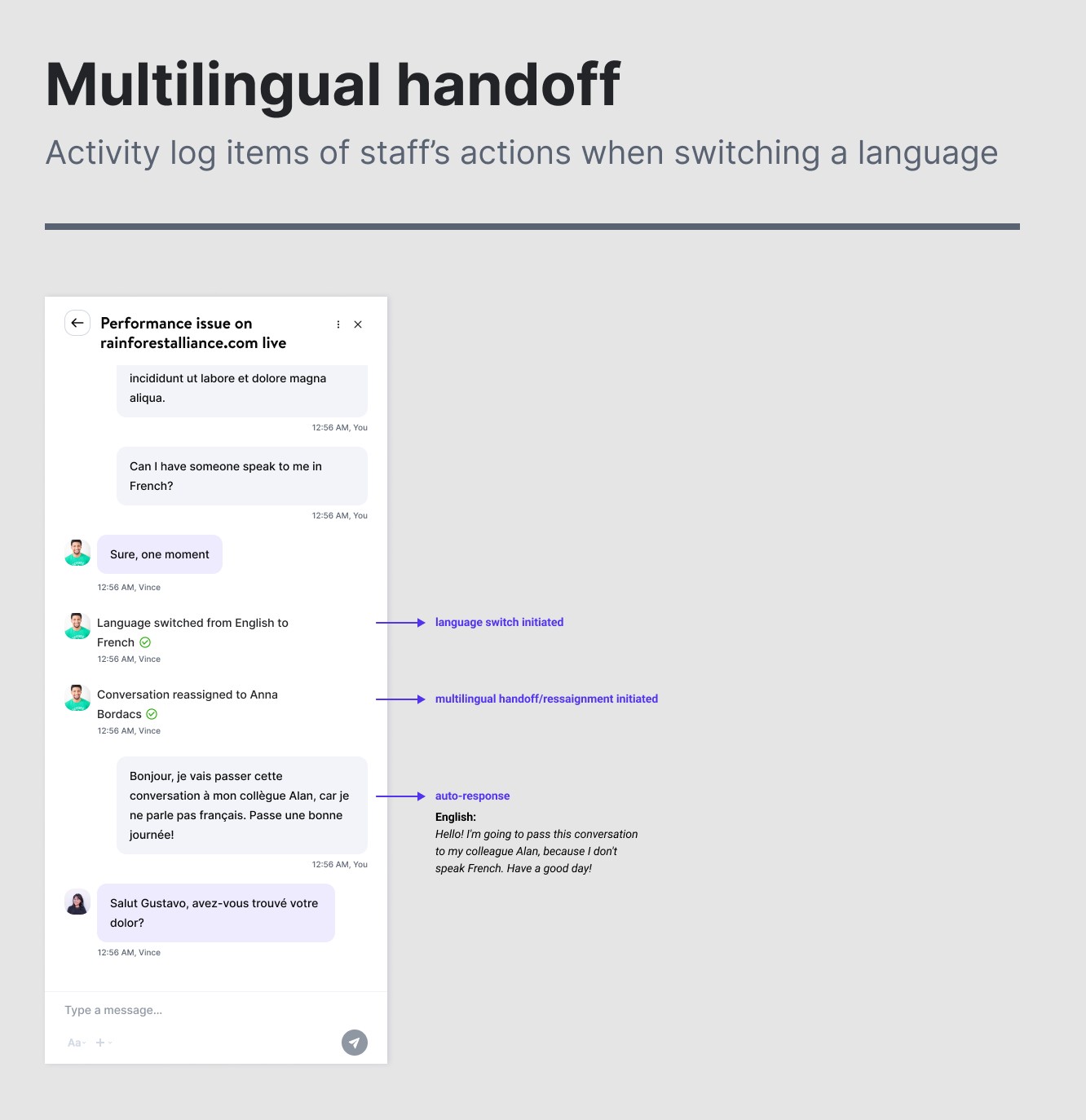
Select the required language from the Language dropdown. The system routes to an available agent who speaks that language and sends the appropriate automated message to the customer.
Once triggered, the staff member is fully unassigned from the conversation. No manual work needed.
For final delivery, I shipped the development team and project manager UI deliverables alongside UX copy for all scenario variations, including edge cases across both handoff types.
Testing & Reflections
TIME TO TEST
Before launch, we ran usability testing with Kinsta's support staff. The response was strong. Agents responded well to the automation logic and found the feature intuitive to use.
FUTURE ITERATIONS
All multilingual message copy is currently hard-coded, meaning any copy changes require additional development time. The dev team recommended building in auto-translation logic to make future copy edits faster and less resource-intensive. This is queued for a future phase.
Final Takeaway
Replacing a tool your team uses every day is a high-stakes design challenge. People are creatures of habit, especially under pressure. What I took from this project is that the best transitions are the ones users barely feel.
By fueling Kinnect's handoff logic to behavior agents already knew from Intercom, we reduced friction and increased convenience at a time where it matters the most. When someone needs to step away and trust the system to handle it—it's trusted that it will be taken care of.
I'd love to bring that same approach to any team navigating a complex tool migration or internal platform build.